

Interview with Hayweee: Part 1
From the new Across Realities Series, Starting with Avatars...

ArmaniXR: For this interview, I join avatar creator Hayweee in VRChat to learn more about her journey inside and outside of social VR, including how she shares the Caribbean culture she grew up with. This is the entire interview, edited for clarity and brevity. 💙🧡
Feel free to also watch the video below to hear more about Hayweee.
ArmaniXR: Can you introduce yourself, including your pronouns and what you want people to know about you as an avatar creator in social VR?
Hayweee: My name is Hayley, but I’m most commonly known as Hayweee. My pronouns are she/her, and I’m a creator for VRChat, just a creator of life, and yeah.
What first pulled you into VRChat or social VR? Can you tell us more about your earliest memories?
Yeah, I definitely loved virtual worlds growing up. All the different types of games like Habbo and Club Penguin and FANTAGE. I was definitely into open virtual worlds because I like being social online. One day I was on Twitch. I really enjoy watching live streams, and I remember seeing streamer Pokelawls. He went on VRChat, and I thought this was just insane.
I thought it was wild how there were people that were not only in their own avatars, but they’re also moving in the avatars, and they’re also roleplaying and just being whoever they wanted to be. I thought that was cool. And right when I saw that, I knew I needed to download VRChat and get in there and try it myself.
What was the first VR hardware you got to get more into social VR?
I was first on the Oculus Rift because at the time that was the affordable option while still being able to connect to my PC. That was pretty important to me. I didn’t want any standalone type of things because I had a PC at the time. So I was able to get the most out of the VR experience while still being on a budget. So yeah, the Oculus Rift was my first one.
But the Oculus Rift ran into a whole lot of issues, kind of maybe a year or two in. There was a common bug with the mic, and sometimes people would sound really robotic. So after that was happening, then I knew it was time to upgrade. And then I got (which I now have) my Valve Index. I’ve had this since I upgraded, I want to say maybe over four or five years now. And it’s been treating me really well, actually. It’s still going strong, surprisingly.
What avatars or creators made you feel like you could see yourself in them, or vice versa, seeing yourself wearing them?
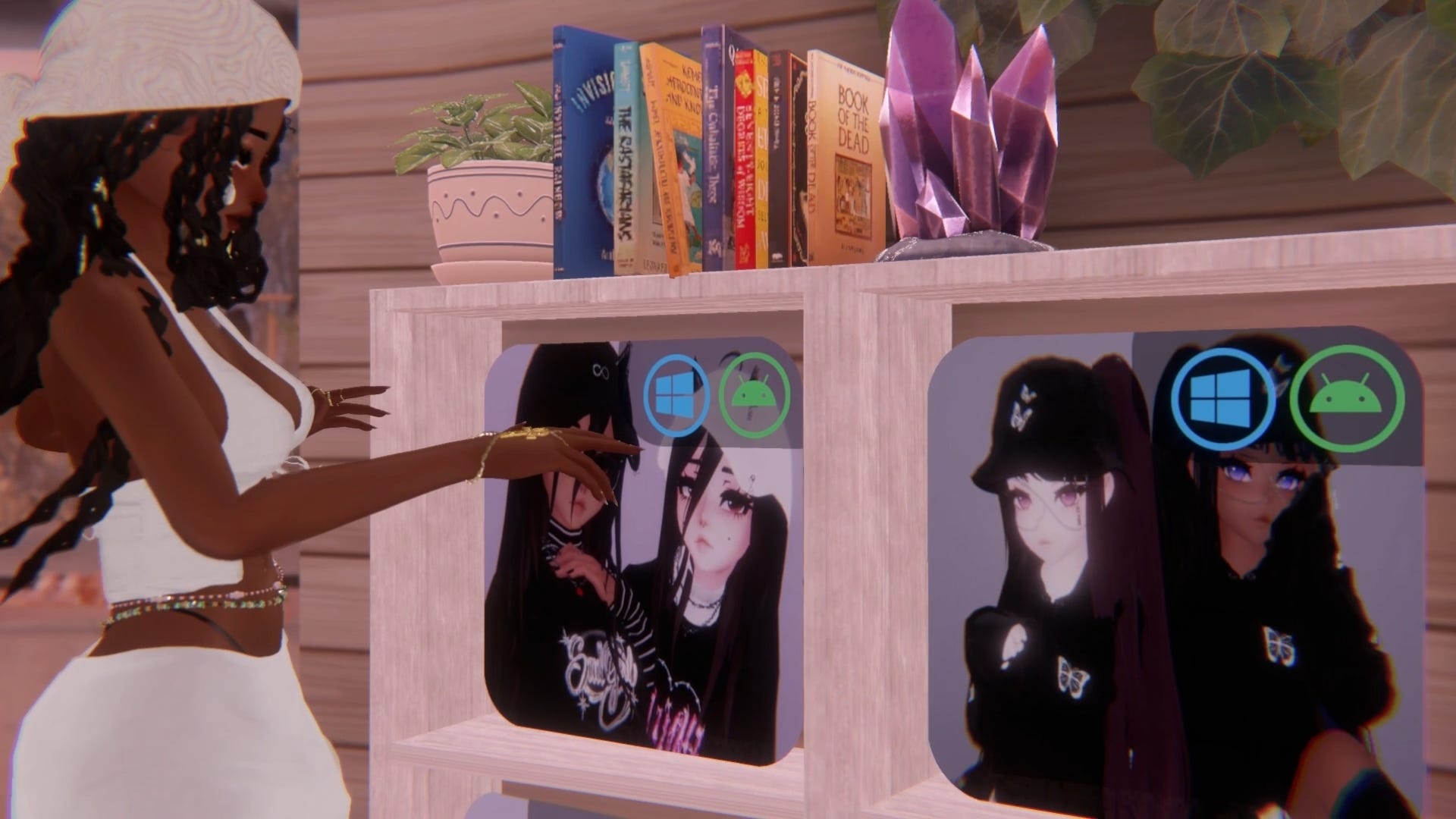
There wasn’t a whole lot of options for people of my skin tone, especially coming into VR early on, and especially the types of avatars that I was looking at, because a lot of them were very anime-heavy. One avatar creator that I really wore frequently, their name is Hazie, and they had an avatar world where they just had regular-looking girls in streetwear, very nice fashion, but it was the same types of girls in different skin tones, which I really liked.
There was a fair-skinned girl and a more tan girl, and then she also had a Black girl version for all of them. So I really enjoyed that. I was wearing a lot of her avatars at first. Then I discovered PoppyAlyssa, who made a lot of Black-focused avatars at that time. Eggu was also someone who made variations that had Black avatars as well. I think Darcy as well. There were a few here and there, but it was definitely something that I had to dig deep for. But definitely shout out to them because they were an integral part of my beginning, my early years on VR, early months, should I say.
Can you describe what your first avatar was like? When I say first avatar, I mean the first one that you chose.
For just wearing around the VR worlds, I definitely chose one that was more covered. Because at first I felt kind of awkward being in what was really popular at the time of just maybe an avatar with a small top and some underwear. That’s why I really appreciated a lot of different Hazie avatars, because a lot of that had Sims clothing. So it was jeans, and sometimes there were some with jackets on.
I really liked streetwear at that time. Different labels like Supreme and North Face or just different things like that. I really liked there was a girl with a beanie that I really enjoyed. Little things like that made me feel comfortable. Obviously, there were avatars here and there that were more risqué that I was wearing too, but the other ones with more clothes definitely made me feel more comfortable to speak in public lobbies and such.
What changed when your avatars started to feel more like you, in terms of the avatars you were most comfortable with?
During that time, especially the early years into VR, I wasn’t even 100% sure of who I even was. I was definitely still finding myself. But early on, I was really into streetwear. I’m really into hip-hop music, hip-hop dancing. So hip-hop fashion was also a part of that. I really liked avatars with cool sneakers or backpacks or just interesting fashion that I thought was urban and more casual. That felt more so like me because those were certain things that I really enjoyed wearing in real life.
But moving more now, I put a whole lot of jewelry on my avatars because I really enjoy wearing jewelry and just more free-flowing, earthy-looking things. So I’ve kind of transitioned from a more street look into more of an earthy look. But that just goes hand in hand with my own personal development and discovery in the VR world.
I’m curious about how your personal journey influenced your avatar journey. It sounds like those two go hand in hand, would you say?
Most definitely. I feel like our avatars, they’re a representation of ourselves. Obviously, we all have different sides of ourselves, right? We have different outfits for different occasions, different moods, different days. But as I was exploring more styles, different styles, it felt like I was exploring different parts of me as well.
I see cowrie shells and jewelry in your hair. Can you say more about that?
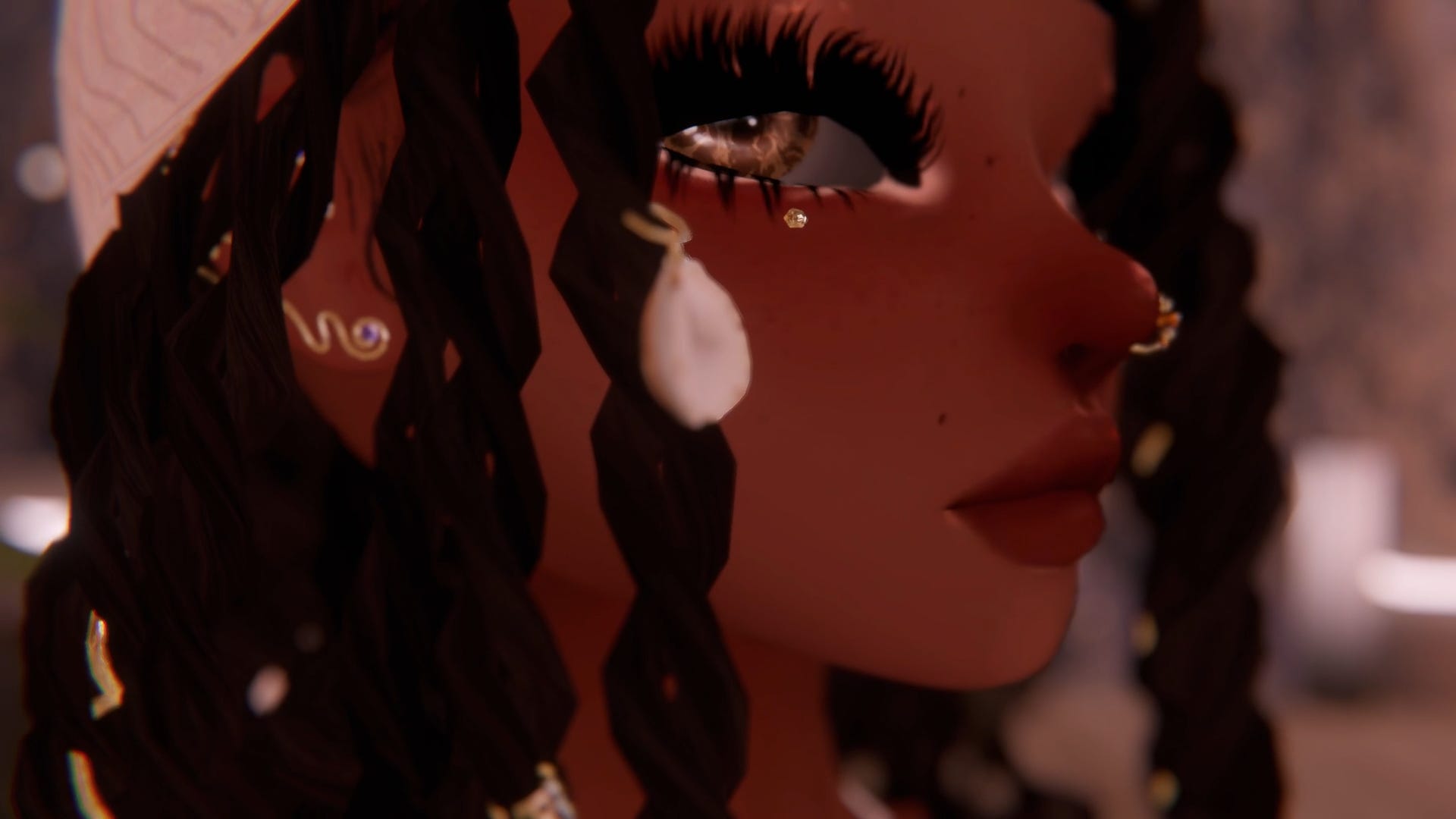
Yeah, I definitely enjoy adding different pieces that are cultural. I’ve been learning a lot about cowrie shells and just shells in general and how many people in the African diaspora use these as symbols of abundance. It’s almost like carrying a lucky charm with you. So I enjoy seeing jewelry like that and just very intentional jewelry as well.
Your background, specifically family-wise…how would you describe how they influenced who you are now with your cultural representation in social VR?
I was born in Canada, and so was my dad, so I’m very much Canadian, I would say. But my grandparents, they bring in a lot of culture into my life with their cooking and with the music that they play. I have two grandfathers from Barbados who were born in Barbados, and I have a grandmother who was born in Jamaica, and another grandmother who was born in Trinidad. Since my grandmothers do the cooking, I was introduced to a lot of their culture first. I feel like I’m the most comfortable with Trinidadian culture, but I actually recently went to Jamaica and I learned a lot while I was there, and I felt very connected there.
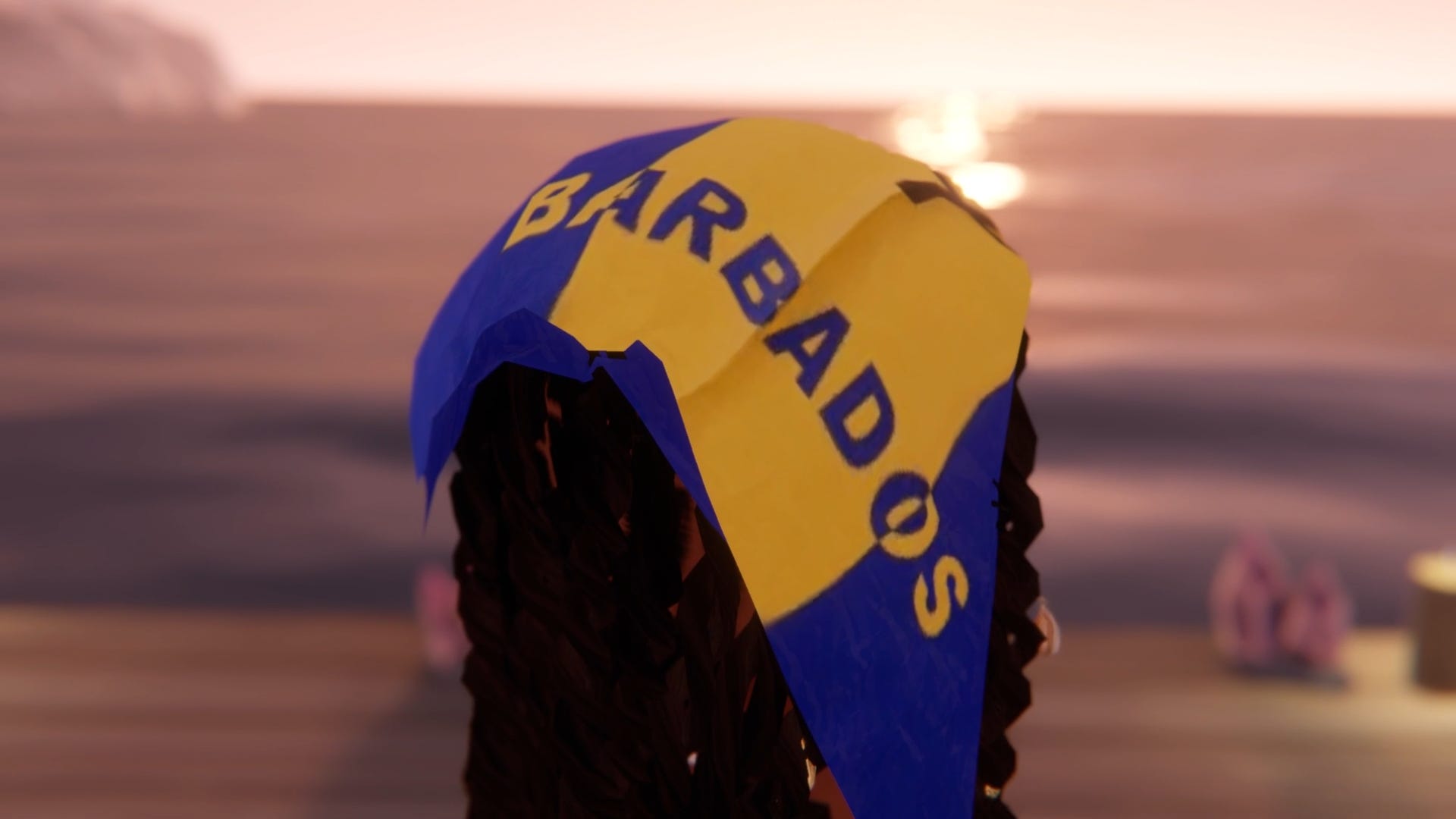
In terms of culture, I wanted to create more surrounding that. With this avatar specifically, I have a toggle for bandanas that have different flags on them. I wanted to specifically add Caribbean bandanas because I know that’s just a popular thing to do within the Caribbean. Wherever you’re from, there’s some bandana that has your country’s flag on it, at least as far as the Caribbean goes. I wanted to add that to my avatars because just like in real life, I have a bunch of bandanas that have the Bajan and Trini and Jamaican flags on them.
Me learning more about jewelry and different hairstyles as well, that’s also different ways that my culture ties into what I’m creating now. Not so much before, because I wasn’t too in touch with that when I first started making avatars. But as I’ve continued creating avatars and just getting deeper into my own 3D modeling journey and creating in general, I’ve shifted my values into focusing on myself and where I’m from. So I make sure to add that into my creations now. But that definitely didn’t start out that way. It’s been a journey.
How did you develop self-confidence and confidence to share your culture in your creations? How did that come about?
Honestly, it was really just learning more about myself, about the past, about history. I heard a great quote: if we don’t know where we came from, we don’t know where we’re going. For a very long time, coming out of high school, getting straight on the internet, doing a lot of YouTube and streaming and then getting into games and VR, it felt like my attention was always being pulled in many different ways.
I was always paying attention to what others were doing and what the new trends were and what the new games were. But I wasn’t ever really learning so much about myself, especially because I went to a school that didn’t have too many Black people. That wasn’t always the center focus until February came around for Black History Month. But when I started to get more in touch with myself, when I chose to get more into my own sort of awakening, that’s when I decided to learn about my history and the importance of hair and the importance of melanin and cooking and different things like that.
When I started to inform myself about the past and why we do certain things, then I learned why it’s important to continue it and especially keep it open and visible in spaces like this, because things can kind of just get lost, especially in VR. The knowledge of the whole thing was very eye-opening to me.
Can you describe that moment (Or would you say it’s a series of moments?) where you discovered more of who you are and when that confidence grew to know more about your culture and share more about that in social VR?
That transition was definitely happening while lockdowns were happening. So I had a lot of time to be with myself and just figure out what exactly is next, what exactly is going on. A lot of that time was spent in VR as I was just sort of enjoying my time, trying to relax, trying not to be too freaked out.
Along that journey, I met a lot of very interesting people. One person introduced me to a person on YouTube who shares a lot of knowledge or information that isn’t typically taught in schools or in history class. A lot of these things were very interesting to me. A lot of that was brought to my attention from people that I met through VR. So I’m very grateful that I was able to meet a wide variety of people who were able to introduce me to a lot of new things.
From that, I also found different communities within VR. There is a whole world called VR Mystery School, and they have a lot of resources for books and they also have group meetings. I ended up joining their Discord and into a couple of the meetings just to hear what was being talked about and discussed. A lot of me transitioning into learning new things that I had never heard before was through others in VR. So definitely shout out to the people.
Through me learning about history is when I learned about the importance of my hair, clothes, food, different things like that. That helped me get more in touch, more comfortable, and then just allowed me to want to own what I have more rather than trying to be like what’s popular, what’s trending, beauty standards, and things like that.
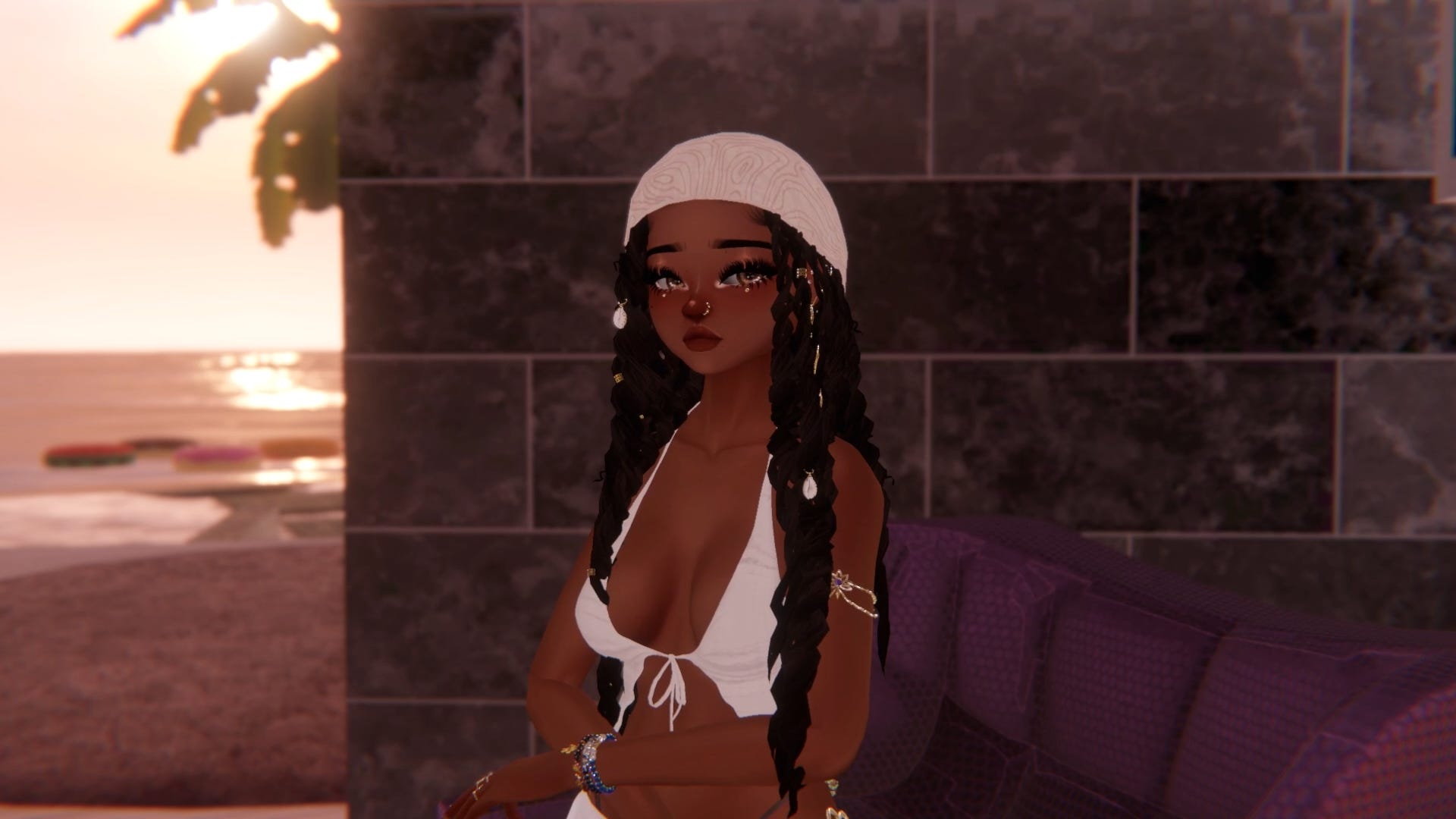
That all really helped me feel more confident in who I am and knowing who I am and knowing that I don’t have to try to be lighter. A lot of my beginning avatars were a lot lighter than shades that I am right now. They were a lot lighter than what is actually reflected beyond this headset. That was because of insecurity and trolls and just a whole lot of lack of self-confidence. So as I was learning too, my avatars also got darker. They also started to mirror more of my skin tone rather than just being a tan version of a fair-skinned avatar.
Part 2 of my interview with Hayweee will be available soon.